
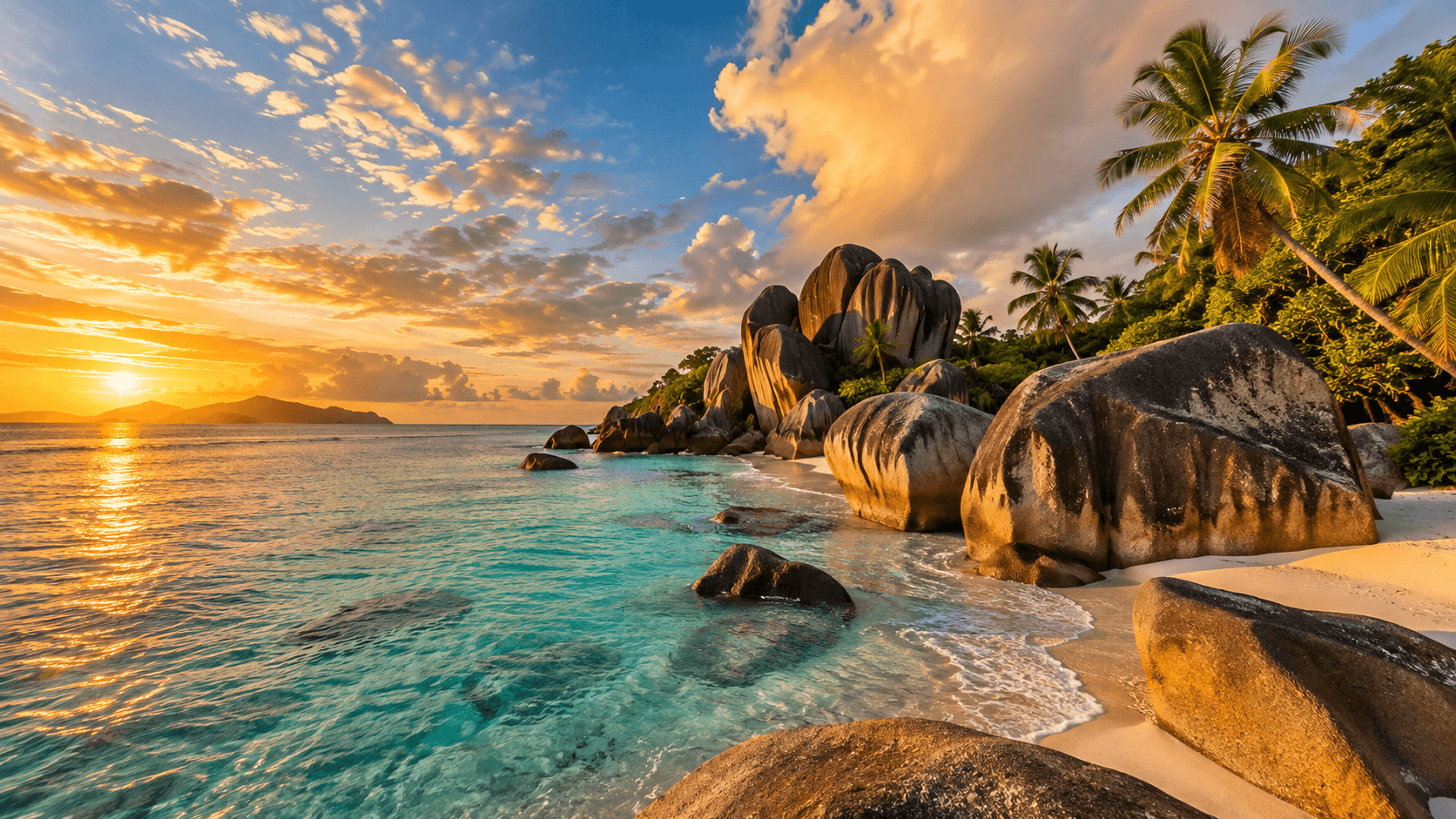
Seychelles is 115 islands scattered across the Indian Ocean, but almost every visit runs through just three of them. Mahé, the largest, holds the capital Victoria (one of the smallest capitals in the world), the international airport, and Beau Vallon's main resort beach. Praslin, a short flight or ferry away, adds the Vallée de Mai — a UNESCO-listed palm forest home to the giant coco de mer nut — alongside some of the archipelago's best beaches. La Digue, smaller and car-free, is where the country's famous granite boulders meet turquoise water at Anse Source d'Argent, and getting around means a bicycle or an ox-cart taxi rather than a rental car.
Seychelles has built its reputation on the high end of the market — private-island resorts and honeymoon travel are the country's signature draw, and pricing reflects that — but a real, if modest, self-catering and guesthouse tier exists too, a legacy of a deliberate government push to diversify beyond big resorts. One genuine geographic advantage sets it apart from its Indian Ocean neighbors: Seychelles sits mostly outside the main cyclone belt that affects Mauritius and Madagascar, making its weather calendar a comparatively gentle one to plan around.